


Learning To Trust Again - Rebuilding Bridges After Betrayal and Heartbreak.
- Oct 6, 2025
- 8 min read
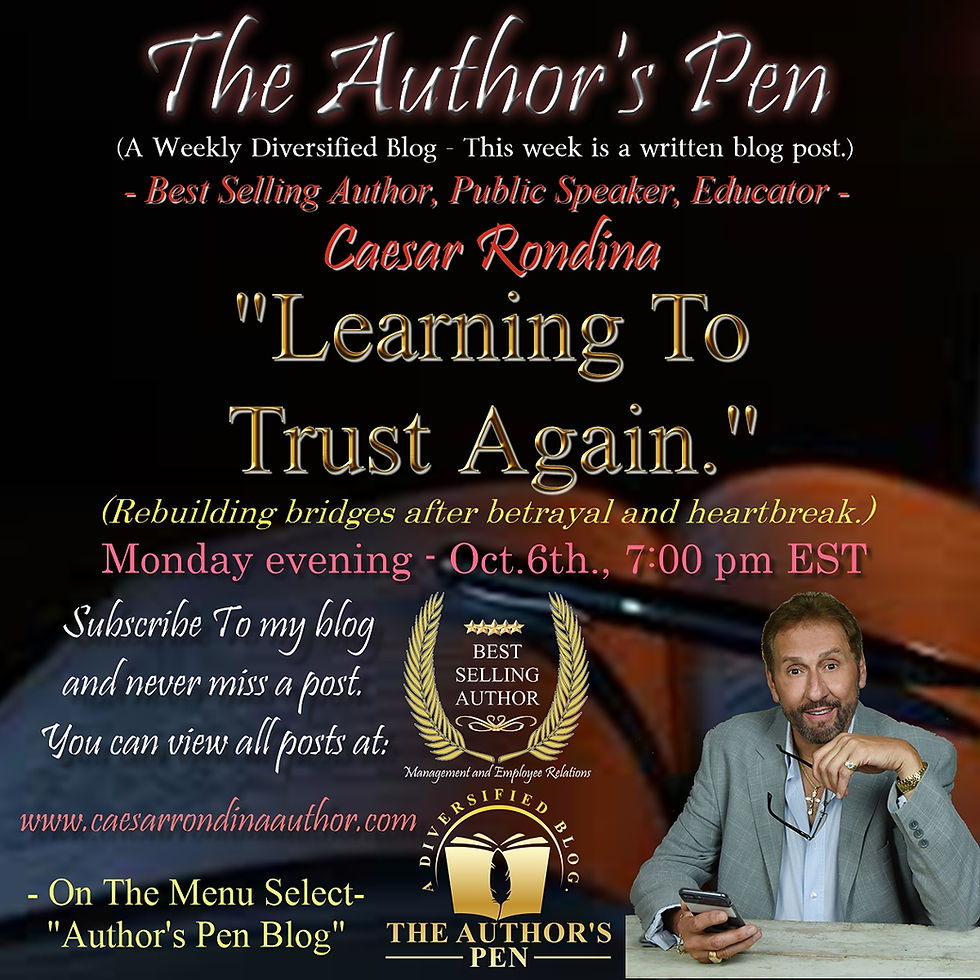
INTRODUCTION - trust, betrayal, heartbreak. Learning To Trust Again
Greetings. I'm not sure if it's the time of year with holidays approaching, or if there is something in the water. This week, I received a few emails asking me to discuss betrayal, trust, heartbreak, and how to trust again. If we're all being honest, we've all experienced betrayal, trust, and heartbreak issues within relationships. Many have overcome this, and it has not affected their emotional future. However, many have not. It is estimated that 43% of people don't survive infidelity issues and take these feelings into their future relationships (REFERENCE)
Our pasts, as difficult as some things may have been, are part of our learning and growing process. Relationships are not easy, and when we are younger, we are all vulnerable and not fully emotionally developed. Along the way, we will experience bumps in the road. However, for some people, this behavior is habitual, and they are repeat offenders. The cause for this varies. Many have seen it in their families and learn to believe it is normal and acceptable; they may suffer from insecurity issues, or they may be vain and are always looking for something better. These issues not only affect themselves, but they also affect the significant other in their life. This is where personal emotional problems begin.
When someone experiences betrayal or heartbreak, it can create significant emotional and psychological scars that make trusting others again a daunting challenge. Whether it's a romantic partner who cheated, a friend who betrayed confidential information, or a family member who let you down, the aftermath can leave you feeling isolated and wary of opening up to others. Trust issues can infiltrate various relationships, stunting emotional growth and leading to a cycle of withdrawal and distrust.
The path to learning to trust again involves a combination of personal reflection, gradual exposure to new interactions, and communication. It requires actively working through the feelings of loss and betrayal, establishing supportive environments, and setting healthy boundaries. Let's dive in and explore how we can recover and move forward with some examples.
ACKNOWLEDGMENT:
Acknowledging your feelings is the first step to recognizing and validating your emotions. Anger, sadness, and confusion are natural responses to betrayal. Allow yourself to experience these emotions fully without guilt.
Example: After being cheated on, Sarah took time to journal about her feelings, acknowledging her hurt instead of trying to push it aside. This helped her avoid suppressing her emotions, which could lead to future issues in relationships.
UNDERSTANDING:
Reflect on how the betrayal has affected your view of trust. Consider what specifically caused your distrust and how it has manifested in your interactions with others. You can't hold others accountable for what someone else has done to you.
SUPPORT:
Seeking support is always helpful. Talking to someone you trust—a friend, family member, or therapist—can help you process your feelings. Their perspective can offer insight and comfort you may not have considered.
Example: Mark decided to join a support group for individuals who experienced similar betrayals. Hearing others' stories not only validated his feelings but also provided new coping strategies.
SETTING HEALTHY BOUNDARIES:
After experiencing betrayal, it's vital to establish boundaries to protect yourself. Communicate these boundaries to new potential friends or partners, ensuring they are aware of your needs. Use "I" statements to express your boundaries. For example, saying "I feel unsafe sharing personal details until I know someone better" can encourage understanding instead of defensiveness.
TAKE SMALL STEPS TOWARDS TRUST:
Rebuilding trust doesn't need to happen overnight. Begin by making small gestures that help you navigate the waters of trust again, such as sharing minor secrets or being vulnerable about trivial matters. Rome wasn't built in a day, and neither is trust. Trust is a mutual bond that develops over time. Don't rush it.
PRACTICE FORGIVENESS:
Forgiveness is a powerful tool—not just for the betrayer but also for yourself. Letting go of resentment can lighten the emotional burden you've been carrying. For me, this was always the most challenging step. Coming from the Italian culture, we do not easily forgive. However, over time, I learned that letting things go and forgiving someone gave me closure. Forgiving does not mean I accept their betrayal; it means I have moved on from it, although I could never trust them again.
ENGAGE IN SELF-REFLECTION:
Understanding your contribution to past relationship dynamics can empower you. Reflect on patterns you may have established that allowed betrayal to occur, and how you can change these moving forward. Whether we choose to accept it or not. There are times when our behavior may have contributed to a betrayal.
Example: After much reflection, Tom recognized that he often ignored red flags about trust in his relationships. This led him to become more discerning in the future. Tom may have realized some mistakes he made, which would help him avoid repeating his behavior in the future. Being honest with ourselves is a critical step in our recovery process.
REFRAME YOUR NARRATIVE:
Shift your mindset from being a victim to empowerment. Focus on the lessons learned and how you can apply them in your future relationships. Create positive affirmations to counter negative thoughts about trust, such as "I am capable of building loving and trustworthy relationships."
ENGAGE IN TRUST-BUILDING ACTIVITIES:
Participating in social or team activities can help rebuild your sense of trust organically. This could involve community service, team sports, or group classes. A dear friend of mine, after a difficult breakup, joined a local hiking group as a way to build connections without the pressure of intimate conversations, allowing her to trust others gradually.

There are always pros and cons to everything in life. The pros are that we can learn to trust again, which can lead to deeper, more fulfilling connections with others. We can emotionally mature and enhance our resilience as we learn to navigate the complexities of human relationships. Therefore, opening ourselves up to trust can lead to new friendships and romantic possibilities.
As for the cons, we have fear of rejection and further betrayal. We are afraid to trust, which can hinder a relationship from developing. Each time we allow ourselves to be vulnerable, we think of the chance of being hurt again.
THE BEST WAY TO MOVE FORWARD:
First, stop looking back. Start with yourself. Prioritize self-discovery and self-care. Familiarize yourself with your own worth and the qualities you seek in relationships. Hone your communication abilities to express your needs and feelings more effectively. Clear communication minimizes misunderstandings that can lead to betrayal.
Choose trustworthy partners. Take time to evaluate potential friends and partners. Look for evidence of honesty and reliability before opening yourself up. Assess the behavior patterns of those you're considering trusting. Look for consistency in their words and actions over time. Accept that this is a process. Understand that learning to trust again is not linear. You will experience setbacks and progress at varying rates. Accepting this can help you maintain patience with yourself.
AVOID THE PITFALLS:
Don't rush the process. Avoid the temptation to trust others too quickly. This can lead to disappointment and discouragement if the trust is broken again. Pay attention to red flags in new relationships. Trust your instincts if something feels off, and don't ignore your gut feelings.
Don't compare new relationships to past ones. Each relationship and individual is unique. Comparing new acquaintances to those who have hurt you can lead to misplaced judgments and unnecessary fears. It's easy to become consumed by past hurts, but maintaining self-care routines helps cultivate resilience and emotional strength. Stop feeling like you have to justify your boundaries. Your right to set boundaries doesn't require justification. Surround yourself with those who respect your limits without question.
FINAL THOUGHTS:
Keep track of your journey of rebuilding trust. Documenting small victories can reinforce positive change. Engage in mindfulness exercises to remain present and reduce anxiety about the future. This helps decrease the fear that can accompany new relationships. Stay Open-Minded. Approach new connections without preconceived notions. Allow people the opportunity to show you who they are without the shadow of past betrayals.
Committing to the journey of trusting again is a personal choice that requires courage and intention. By following these steps and managing your expectations, you can build a foundation of trust that enriches your life and facilitates deeper connections with those around you. Let's look at a couple of more examples.
Sarah, who discovered her partner had been unfaithful, initially felt overwhelming sadness mixed with anger. When attempting to meet new people, she found herself on edge, constantly anticipating the subsequent betrayal.
Tip - To address this, it's essential to acknowledge and process these feelings first. Sarah could choose to journal her emotions daily, focusing not just on her anger but also on moments of joy, thus creating a balanced view of her experiences. Seeking guidance through therapy could also provide tailored coping strategies and help her work through her feelings in a structured way.
John recently ended a long-term relationship due to infidelity and has now started dating again. However, every time he notices something slightly off with his new partner, he recalls the hurt from his past and assumes the worst, often leading to unnecessary arguments.
Tip - To prevent past experiences from overshadowing new potential, John can implement a practice of mindfulness. By consciously reminding himself that his current partner is not the same as his ex, he can take a step back and assess whether his concerns are valid or merely a projection of past pain. Engaging in open dialogues with his new partner about his feelings can also help build understanding and reduce anxiety.
Tom has recently begun to venture into the dating scene but is plagued by the fear of rejection, stemming from past heartbreak. Every time a date doesn't go as planned or an interaction feels awkward, he panics and retreats completely.
Tip - It may be beneficial for Tom to reframe his perspective on dating as an opportunity for personal growth rather than merely seeking approval. He can set small, manageable goals, such as attending social events with the intention of making new friends instead of solely focusing on romantic connections. This shift in mindset could alleviate some pressure and lead to enjoyable experiences, making rejection feel less personal.
IN CLOSING:
Learning to trust again after experiencing betrayal and heartbreak is undoubtedly a challenging journey, but it is also a profoundly rewarding one. By reflecting on our past experiences, embracing vulnerability, and engaging in open communication, we can gradually rebuild our capacity to trust. Remember that healing is not linear—there will be ups and downs along the way. However, with patience and self-compassion, it is possible to emerge from the shadows of betrayal stronger and more resilient than ever.
Trust is not just about relying on others; it is also about believing in ourselves and our ability to forge meaningful connections again. As we move forward, let us carry the lessons of the past with us while remaining open to the beauty of new relationships and experiences. Trust can flourish again, and with it, a renewed sense of hope and love.
I hope you enjoyed this week's blog post. Please subscribe to my blog, YouTube channel, or Vimeo Channel, and follow me on Facebook, LinkedIn, Instagram, Truth Social, and "X" (Formerly Twitter).
Please feel free to leave a comment. If you would like me to discuss a topic or have any questions regarding a post, please email me at crondina@caesarrondinaauthor.com. As always, I accept guest blog posts. If you wish to write about a topic, email your finished draft in an editable Word format to crondina@caesarrondinaauthor.com. I will review it and get back to you.
Thank you.
Be safe, stay well, and focus on being happy. And remember to always:
Live with an open mind,
Live with an open heart,
Live your best life.
Best Regards,
Caesar Rondina

VIDEO PRODUCTION WORK:
We produce video book trailers, business ads, and speaker introductions.
When you subscribe to my blog, you receive an email notification when a blog post is published. Never miss a post. Clicking this link. SUBSCRIBE. We never share or sell our email list.


Comments